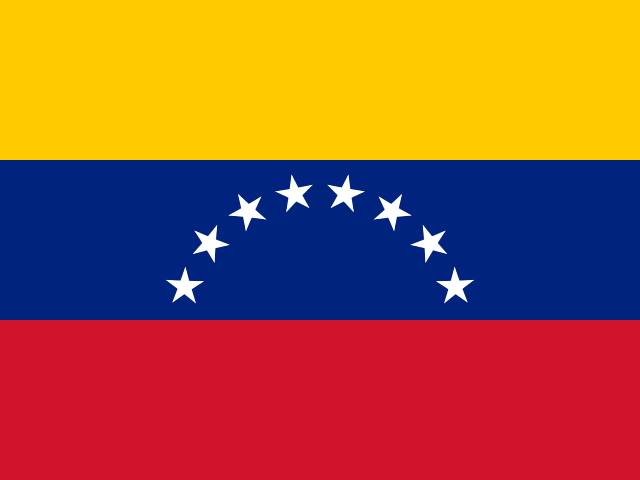
VEF
Venezuelan bolívar fuerte
ISO 4217 code, symbol, exchange-rate context, and country information for Venezuelan bolívar fuerte - VEF.
Overview
The Venezuelan bolívar fuerte was Venezuela's currency from 2008 to 2018, when hyperinflation made it practically unusable. It was replaced by the bolívar soberano (VES) at 100,000:1. Venezuela experienced one of the worst hyperinflation episodes in modern history, destroying the currency's value and devastating the economy.
Economy
- Venezuela is a member of OAS (suspended), UNASUR, CELAC, OPEC, Non-Aligned Movement.
- Main industries include: Petroleum, Construction materials, Food processing, Textiles, Iron ore mining, Steel, Motor vehicle assembly.
- Venezuela is part of the World Trade Organization.
- Imports are agricultural products, livestock, raw materials, machinery, equipment, transport equipment, construction materials.
- Major exports include petroleum, bauxite, aluminum, minerals, chemicals, agricultural products, basic manufactures.
- GDP: $482.4 billion (2013, peak before crisis).
- GDP per capita: $15,692 (2013, before collapse).
- Unemployment rate: 7.3% (2015, before crisis escalation).
- Inflation rate: 1,370,000% (2018, hyperinflation peak).
- Main trading partners: United States, China, India, Cuba, Turkey, Russia.
- Trade agreements: Limited due to sanctions, Some bilateral agreements with allied countries.
History
- Previous currencies used: Venezuelan bolívar, Venezuelan peso.
- The bolívar fuerte was introduced in 2008, replacing the bolívar at 1000:1. Despite the redenomination, economic mismanagement led to catastrophic hyperinflation and eventual replacement.
- 2008: Bolívar fuerte introduced, replacing bolívar at 1000:1
- 2013: President Chávez died, economic crisis deepened
- 2014: Oil price collapse devastated economy
- 2016: Hyperinflation began accelerating rapidly
- 2017: International sanctions increased economic pressure
- 2018: Replaced by bolívar soberano at 100,000:1
- Exchange rate peg: Multiple exchange rate controls and artificial pegs.
General Information
- ISO 4217 Code: VEF
- Symbols: VEF/Bs.F
- Status: Replaced by VES (bolívar soberano) in 2018
- Currency Subunits: 100 céntimos
- Central Bank: Central Bank of Venezuela
- Monetary Policy: Currency was abandoned due to hyperinflation caused by fiscal deficits, price controls, and economic mismanagement. Replaced by bolívar soberano with attempt at monetary reform.
- Bills: 2 VEF, 5 VEF, 10 VEF, 20 VEF, 50 VEF, 100 VEF, 200 VEF, 500 VEF, 20000 VEF, 50000 VEF, 100000 VEF
- Coins: 1 céntimo, 5 céntimos, 10 céntimos, 12.5 céntimos, 25 céntimos, 50 céntimos, 1 bolívar
- USD Exchange Rate: Hyperinflated (millions of VEF per USD by 2018)
- Pegged To: None (Floating)
- Replacement Rate: 100,000 VEF = 1 VES (2018)
- Capital: Caracas
- Population: 28,838,499 (2023 est.)
- Area: 912,050 km²
- Languages: Spanish (official), Numerous indigenous dialects
- Time Zones: UTC-4 (Venezuela Time)
- Government Type: Federal presidential republic
- Head of Government: President (head of state and government)
- Independence: July 5, 1811 (from Spain)
- Ethnic Groups: Unspecified Spanish, Italian, Portuguese, Arab, German, African, Indigenous 87.6%, African descent 9.7%, Indigenous 2.7%
- Religions: Nominally Roman Catholic 96%, Protestant 2%, Other 2%
- Literacy Rate: 97.1% (2016 est.)
- Transport: Simón Bolívar International Airport, road networks, Caracas Metro, Caribbean and river ports
- Communications: Telecommunications infrastructure degraded, 72% internet penetration (declining), mobile network issues
- Energy: Hydroelectric 64%, Natural gas 18%, Oil 18% (infrastructure deteriorating)
- Countries Using This Currency: Venezuela
- Data Sources: Central Bank: Central Bank of Venezuela (bcv.org.ve), Economic Data: National Institute of Statistics Venezuela, World Bank estimates, IMF, Trade Data: SENIAT (limited recent data), Demographic Data: National Institute of Statistics Venezuela, Geographic Data: INAMEH (National Meteorology Institute), Historical Data: Central Bank of Venezuela archives
- Last Updated: 2025