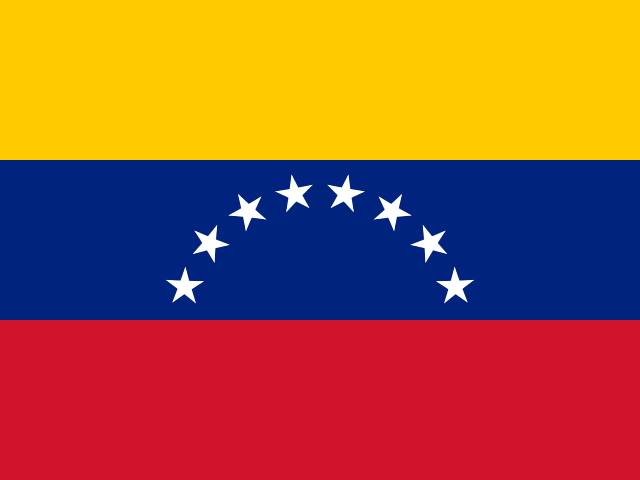
VED
Venezuelan bolívar digital
ISO 4217 code, symbol, exchange-rate context, and country information for Venezuelan bolívar digital - VED.
Overview
The Venezuelan bolívar digital is a digital currency introduced by Venezuela in 2018 as part of the government's attempt to circumvent international sanctions and economic crisis. It operates alongside the traditional bolívar soberano but with limited international acceptance.
Economy
- Venezuela is a member of OAS (suspended), UNASUR, CELAC, Non-Aligned Movement.
- Main industries include: Petroleum, Construction materials, Food processing, Textiles, Iron ore mining, Steel, Motor vehicle assembly.
- Venezuela is part of the World Trade Organization.
- Imports are agricultural products, raw materials, machinery, transport equipment, construction materials.
- Major exports include petroleum, bauxite and aluminum, minerals, chemicals, agricultural products, basic manufactures.
- GDP: $219.2 billion (2023 est.).
- GDP per capita: $7,704 (2023 est.).
- Unemployment rate: 5.7% (2021 est.).
- Inflation rate: 234.1% (2023 est.).
- Main trading partners: China, Turkey, Russia, India, Spain, Brazil.
- Trade agreements: Limited due to international sanctions, Bilateral agreements with allied countries.
History
- Previous currencies used: Venezuelan bolívar soberano (VES), Venezuelan bolívar fuerte.
- The bolívar digital was announced in 2018 as a state-issued cryptocurrency, backed by oil reserves. It was part of Venezuela's strategy to create an alternative payment system amid international sanctions.
- 2018: Bolívar digital announced as state cryptocurrency
- 2018: Pre-sale launch with limited international participation
- 2019: Government attempts to use for oil sales
- 2020: Integration with national payment systems
- 2022: Limited adoption due to technical and political issues
- Exchange rate peg: Officially backed by oil reserves and other commodities.
General Information
- ISO 4217 Code: VED
- Symbols: VED/Bs.D
- Currency Subunits: 100 céntimos
- Central Bank: Central Bank of Venezuela
- Monetary Policy: Digital currency experiment with limited success. Operates parallel to traditional bolívar with government backing through commodity reserves.
- Bills: Digital currency - exists only in electronic form
- Coins: Digital only - no physical denominations
- USD Exchange Rate: Variable and highly volatile (limited convertibility)
- Pegged To: None (Floating)
- Capital: Caracas
- Population: 28,838,499 (2023 est.)
- Area: 912,050 km²
- Languages: Spanish (official), Numerous indigenous dialects
- Time Zones: UTC-4 (Venezuela Time)
- Government Type: Federal presidential republic
- Head of Government: President (head of state and government)
- Independence: July 5, 1811 (from Spain)
- Ethnic Groups: Unspecified Spanish, Italian, Portuguese, Arab, German, African, Indigenous
- Religions: Roman Catholic 96%, Protestant 2%, Other 2%
- Literacy Rate: 97.1% (2016 est.)
- Transport: Simón Bolívar International Airport, road networks, limited rail, Caribbean and Atlantic ports
- Communications: Limited telecommunications infrastructure, 72% internet penetration affected by economic crisis
- Energy: Oil and gas 96%, Hydroelectric 4%
- Countries Using This Currency: Venezuela
- Data Sources: Central Bank: Central Bank of Venezuela (bcv.org.ve), Economic Data: Venezuelan National Institute of Statistics, World Bank estimates, IMF, Trade Data: Limited official data due to political situation, Demographic Data: Venezuelan National Institute of Statistics, Geographic Data: Venezuelan Institute for Scientific Research, Historical Data: Central Bank of Venezuela archives
- Last Updated: 2025