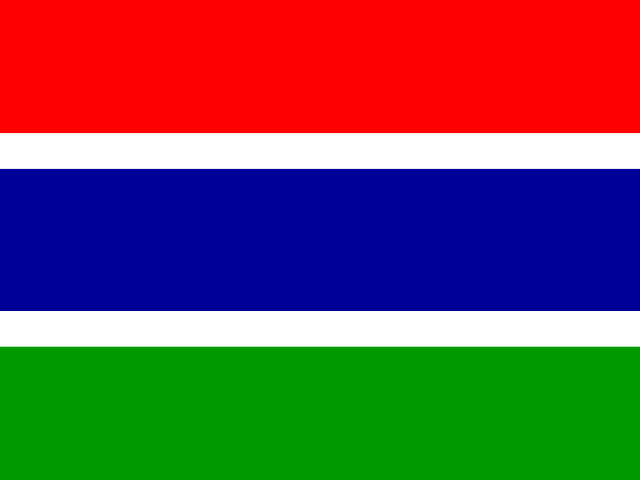
Gambian Dalasi
Dalasi
Currency Code
GMD
ISO 270
Symbol
GMD
Native: D
Decimal Digits
2
Rounding: 0
Countries
GM
Using this currency
Currency Units
Major Unit
Name: dalasi
Symbol: D
Minor Unit
Name: butut
Symbol:
Value: 0.01
Banknotes
Frequently Used
D5D10D20D50D100D200
Coins
Frequently Used
1 butut5 butut10 butut25 butut50 bututD1
Plural Forms
English Plural
Gambian dalasis
Native Plural
Dalasis
Overview
The Gambian Dalasi is the currency of Gambia, managed by the Central Bank of Gambia. It replaced the Gambian pound in 1971 and serves the small West African nation's economy based on agriculture, tourism, and services.
Economy
- Gambia is a member of AU, ECOWAS, Commonwealth, OIC.
- Main industries include: Peanuts, Fish, Hides, Tourism, Beverages, Agricultural machinery assembly, Woodworking, Metalworking, Clothing.
- Gambia is part of the World Trade Organization.
- Imports are foodstuffs, manufactures, fuel, machinery, transport equipment.
- Major exports include peanut products, fish, cotton lint, palm kernels.
- GDP: $2.23 billion (2023 est.).
- GDP per capita: $866 (2023 est.).
- Unemployment rate: 9.6% (2017 est.).
- Inflation rate: 17.1% (2023 est.).
- Main trading partners: China, India, France, United Kingdom, Netherlands, Belgium.
- Trade agreements: ECOWAS, African Continental Free Trade Area, EU Economic Partnership Agreement.
History
- Previous currencies used: Gambian pound, British West African pound.
- The dalasi was introduced in 1971, replacing the Gambian pound at a rate of 5 dalasis = 1 pound. The name derives from the 5-franc coin that circulated in the region during French colonial times.
- 1971: GMD introduced, replacing Gambian pound at 5:1
- 1971: Central Bank of Gambia established
- 1982-1989: Senegambia confederation period
- 1994: Military coup and economic disruption
- 2017: Democratic transition and economic reforms
- Exchange rate peg: Free floating.
General Information
- ISO 4217 Code: GMD
- Symbols: GMD/D
- Currency Subunits: 100 bututs
- Central Bank: Central Bank of Gambia
- Monetary Policy: Flexible exchange rate with inflation targeting framework. Focus on price stability and supporting economic development.
- Bills: 5 GMD, 10 GMD, 25 GMD, 50 GMD, 100 GMD, 200 GMD
- Coins: 1 butut, 5 bututs, 10 bututs, 25 bututs, 50 bututs, 1 dalasi
- USD Exchange Rate: Variable (approximately 67-68 GMD per USD)
- Pegged To: None (Floating)
- Capital: Banjul
- Population: 2,558,482 (2023 est.)
- Area: 11,295 km²
- Languages: English (official), Mandinka, Wolof, Fula, Other indigenous vernaculars
- Time Zones: UTC+0 (Greenwich Mean Time)
- Government Type: Presidential republic
- Head of Government: President (head of state and government)
- Independence: February 18, 1965 (from United Kingdom)
- Ethnic Groups: Mandinka 33.9%, Fulani 18.2%, Wolof 12.9%, Jola 11%, Serahuleh 7.2%, Other 16.8%
- Religions: Muslim 96.4%, Christian 3.5%, Other 0.1%
- Literacy Rate: 50.8% (2015 est.)
- Transport: Banjul International Airport, road network along Gambia River, river transport, limited rail
- Communications: Basic telecommunications, 50% internet penetration, mobile network coverage
- Energy: Fossil fuels 100%, developing solar energy projects
- Countries Using This Currency: Gambia
- Data Sources: Central Bank: Central Bank of Gambia (cbg.gm), Economic Data: Gambia Bureau of Statistics, World Bank, IMF, Trade Data: Gambia Revenue Authority, Demographic Data: Gambia Bureau of Statistics, Geographic Data: Department of Water Resources, Historical Data: Central Bank of Gambia archives
- Last Updated: 2025